top of page

Leimert Animation Studio

Precision Animation for Complex Ideas

Leimert Animation Studio

HeadlinePrecision Animation for Complex Ideas


Leimert Animation Studio helps organizations understand how their environment actually works so they can make smarter decisions

Designed for organizations that value clarity, accuracy, and intellectual rigor

Category: Institutional visual explainer studio
Niche: Conceptually rigorous animation
Differentiator: Analytic clarity
, not stylistic novelty​

Warrior Richardson, Owner,. Visual Systems Strategist, (323) 806-3178, Animate@LeimertAnimationStudio.com

fountain.png

Visualizing the Cultural and Economic Architecture of Community

Decision-Theoretic model of Leimert Park micro-district
Man walking, sees decision-theoretic model and is shocked.

Spatial Structure

of an

Economic Micro District 

Leimert Animation Studio is a founder-led cultural systems consultancy translating complex community ecosystems into clear, strategic visual narratives.

P = municipal intervention intensity

THE WORK: Communities are not abstractions.They are living systems — shaped by history, commerce, art, policy, and memory.Yet institutions are often asked to communicate this complexity in fragments: event flyers, annual reports, grant summaries.We work differently.We study the structure beneath the surface — then translate it visually.

OUR POSITION: Leimert Animation Studio operates at the intersection of:

• Cultural development

• Economic systems analysis

• Strategic narrative design.

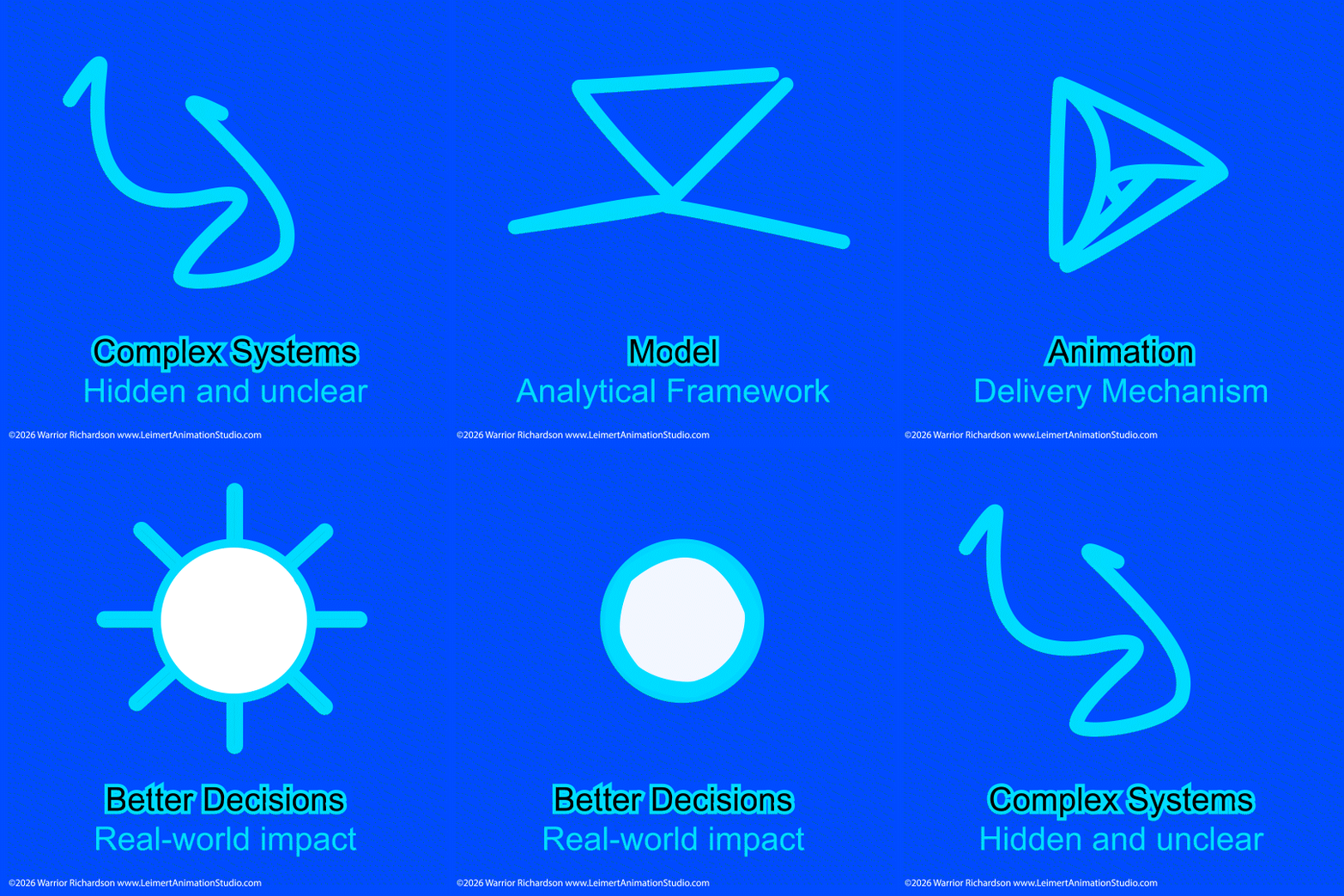
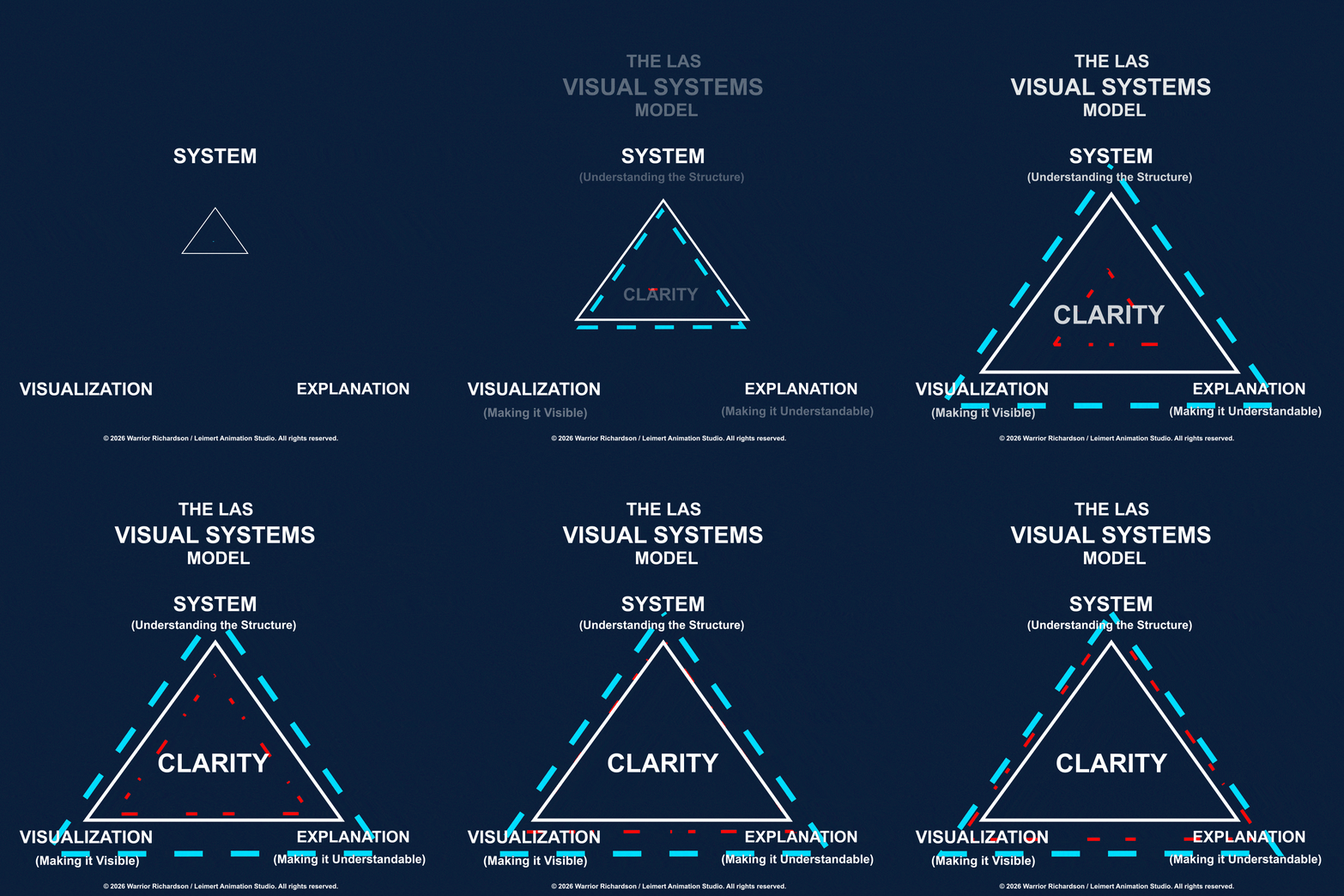
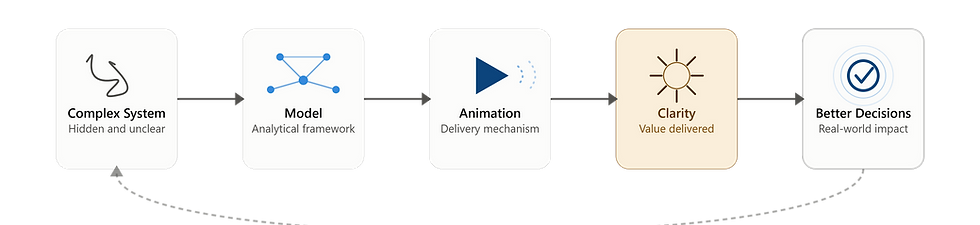
Animation is not our product. Clarity is.

fountain.png
Leimert Park Flow Chart_5 (1).gif
fountain.png

Unlike traditional animation studios, Leimert Animation Studio approaches storytelling through a systems lens.

With a background in economics and policy modeling, we don’t just create visuals — we clarify the underlying structures shaping community outcomes.

Leimert Park Flow Chart_5 (2).gif
Leimert Park Pedestrian Circulation.jpg
Leimert Park Spatial System Behavioral Flow revised February 23 2026.jpg

This enables mission-driven organizations to align culture, strategy, and
measurable impact.

African American Communities can
Survive and thrive

African American communities That successfully Fought Gentrification


African American communities, including the Gullah/Geechee nation, Washington D.C.'s U Street/Shaw corridor, and parts of South Los Angeles (Leimert Park), have successfully fought or slowed gentrification through grassroots activism, cultural preservation (e.g., #DontMuteDC), and land-use initiatives. These efforts often focus on protecting historic districts and affordable housing from development. 

  • Washington D.C. (U Street/Shaw): Residents and activists used the "#DontMuteDC" movement to protest against the cultural erasure of historically Black neighborhoods, particularly after a noise complaint was filed against a long-standing Go-Go music business.

  • Gullah/Geechee Nation (South Carolina): Descendants are using legal strategies, grant-funded restoration of homes, and cultural heritage protection to fight against encroaching developers on coastal lands.

  • South Los Angeles/Leimert Park: This area has maintained its identity as a hub for Black culture and middle-class homeownership, resisting the rapid gentrification seen in other parts of Los Angeles.

  • Newark, New Jersey: The city has implemented strategic, community-based development plans to intentionally mitigate displacement and protect its Black population, supported by organizations like the Institute of the Black World 21st Century.

  • Baltimore, Maryland: In West Baltimore, residents have actively worked to halt development on historic sites to prevent displacement. 

  •  

These communities often employ strategies such as creating land trusts, lobbying for affordable housing, and utilizing cultural landmarks to anchor the community, as seen in efforts to protect the First Baptist Church of Venice. 

The Leimert Park Micro District

Is A

Community-Embedded Cultural Economy 


A community-embedded cultural economy is an economic system where activities are deeply intertwined with local social relationships, cultural traditions, norms, and community networks, rather than operating in isolation based solely on market price mechanisms. It prioritizes localism, sustainability, and social cohesion, often integrating Intangible Cultural Heritage (ICH) and grassroots creative work into the economic fabric. 

Key Aspects and Characteristics

  • Socially Embedded: Economic actions (production, consumption, trade) are shaped by cultural values and community trust, such as in gift economies, communal farming, or local artisan markets.

  • Locally Rooted: These economies emphasize local substitution, meaning they satisfy needs using local resources, knowledge, and labor, reducing reliance on the global economy.

  • Integration of Arts and Culture: Cultural activities are not seen as separate from the economy, but rather as central drivers of community health, revitalization, and inclusion, as seen in creative placemaking initiatives.

  • Sustainability and Resilience: They often prioritize long-term community well-being, environmental stewardship, and social equity over rapid profit accumulation.

  • Alternative Valuation: Beyond monetary profit, these systems value social capital, community identity, and the preservation of heritage. 

Benefits and Challenges

  • Benefits: Strengthens social bonds, fosters a sense of place, creates resilient local economies, and helps heal collective trauma.

  • Challenges: These initiatives are often slower, harder to quantify for traditional, and less scalable. They may also face "existential threats" from funding streams that favor large, established institutions over grassroots, neighborhood-based groups.

------------------------------------------------------------------------------------------------------------------------------------------------------------------------------------------------------------------------------

------------------------------------------------------------------------------------------------------------------------------------------------------------------------------------------------------------------------------

The two articles above are from a Google Search.

What is a Spatial Decision Intelligence System?

A Spatial Decision Intelligence System is an advanced, technology-driven framework that integrates Geographic Information Systems (GIS), artificial intelligence (AI), and data analytics to help decision-makers analyze complex, location-based problems. It moves beyond traditional mapping by analyzing, modeling, and predicting how environmental, social, or economic changes affect specific locations. 

MDPI +4

These systems are used to solve "semi-structured" problems, such as determining the best location for a new business, optimizing delivery routes, or managing disaster responses. 

Wikipedia +1

Key Components of a Spatial Decision Intelligence System

  • Database Management System: Collects, stores, and handles both geographic (e.g., maps, satellite images) and non-spatial data.

  • Modeling Toolkit: Contains analytical models, AI algorithms, and simulation capabilities to forecast the outcome of different decisions.

  • User Interface: Provides visualization tools, such as interactive dashboards and map-based interfaces, to aid in analyzing outcomes.

  • Knowledge Base: Incorporates expert knowledge and rules to help interpret spatial relationships, enabling more intelligent decision-making. 

    UCGIS +4

Spatial Decision Support vs. Spatial Decision Intelligence

While traditional Spatial Decision Support Systems (SDSS) are "data-rich but theoretically poor" (meaning they show data but don't interpret it), spatial decision intelligence systems add AI and machine learning to analyze patterns autonomously. 

ConverSight +1

  • SDSS: Provides maps and data to help a human make a decision.

  • Spatial Decision Intelligence: Uses predictive analytics to suggest the best decision path or automate decisions entirely. 

    Wikipedia +4

Common Applications

Spatial Decision Intelligence Systems are used across various sectors to improve efficiency and reduce risk: 

  1. Retail Site Selection: Analyzing demographics, foot traffic, and competitors to pick the best location for a new store.

  2. Logistics and Supply Chain: Using real-time traffic and weather data to optimize delivery routes and reduce fuel consumption.

  3. Urban Planning: Simulating the impact of zoning changes or planning infrastructure to reduce flood risks.

  4. Healthcare: Mapping disease outbreaks to target interventions, such as mosquito control for dengue fever, or positioning ambulances.

  5. Energy Management: Determining optimal locations for electric vehicle (EV) charging stations and managing grid demand. 

    xMap

Core Technologies

  • GIS (Geographic Information Systems): For spatial data management and mapping.

  • AI/ML (Machine Learning): For identifying patterns and simulating future scenarios.

  • IoT and Remote Sensing: For real-time data ingestion.

  • 3D Modeling/Digital Twins: For high-fidelity visualization of physical spaces. 

    117.252.14.250 +3

These systems are considered critical for modernizing decision-making by turning spatial data into actionable, strategic insights. 

xMap

------------------------------------------------------------------------------------------------------------------------------------------------------------------------------------------------------

All animations, images, designs, concepts, and works displayed on this website—including works-in-progress—are the exclusive intellectual property of Warrior Richardson / Leimert Animation Studio unless otherwise stated.


No content on this site may be used for machine learning, artificial intelligence training, data scraping, dataset creation, model fine-tuning, or derivative generation, whether commercial or non-commercial, without prior written consent.Unauthorized reproduction, redistribution, scraping, mirroring, training, or derivative use is strictly prohibited.

The above article above is from a Google Search.

bottom of page