


Our Animation Process

How It Begins
On this page I will explain the process for creating a storyboard.
As an aside, AI is not going to put human animators out of business anymore than clip art was able to put artists out of work. It's just another tool in an artist's toolbox. It's already incorporated into many animation programs.
The images on this page are best viewed on a laptop or desktop computer.
Stay tuned for more updates.
I'm presenting this material so you can get an idea of the process I go through with my clients. This was an actual project for a client .He had a vision as to what he wanted and I had the skill to execute it for him. He was a satisfied customer in the end.
What is involved
Ever wonder how an animated video is made? Well, here's how it's done. Why should you care? Well, you will have more constructive conversations with yours's truly if you understand the process. For example, when you discover how labor-intensive the process is you'll consider the costs of production and the costs of changes; which will result in confining your requests to only those that are cost-effective and essential.
Some might say, "There's always AI generated videos". For sure, but there are significant differences between AI generated videos and hand-drawn ones. Knowing the difference will inform your decision.
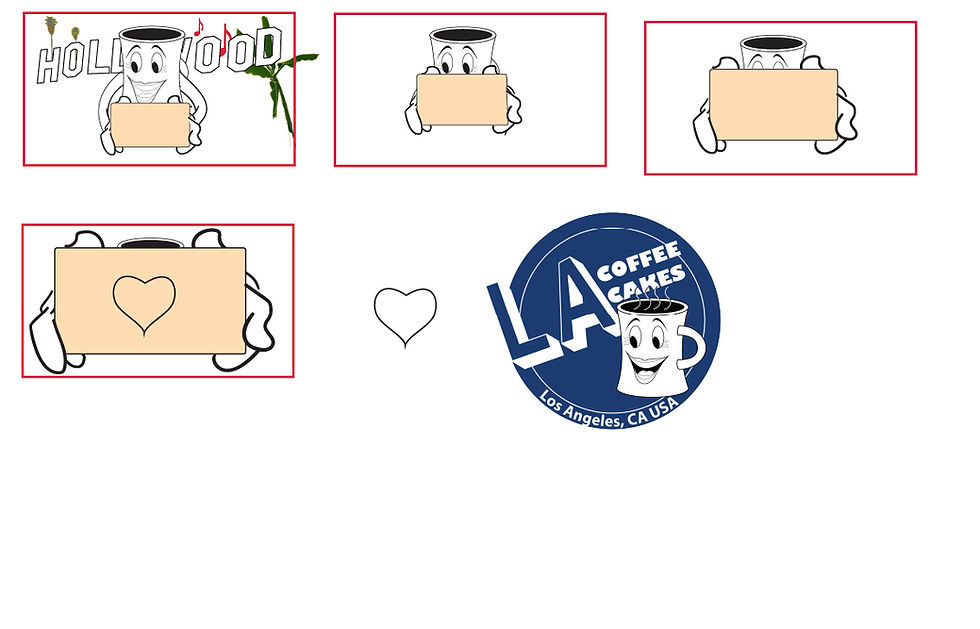
It begins with a sketch.

Then a refined logo

And, of course, a
charismatic mascot

Then we combine the two.

You can even put your mascot in advertisements

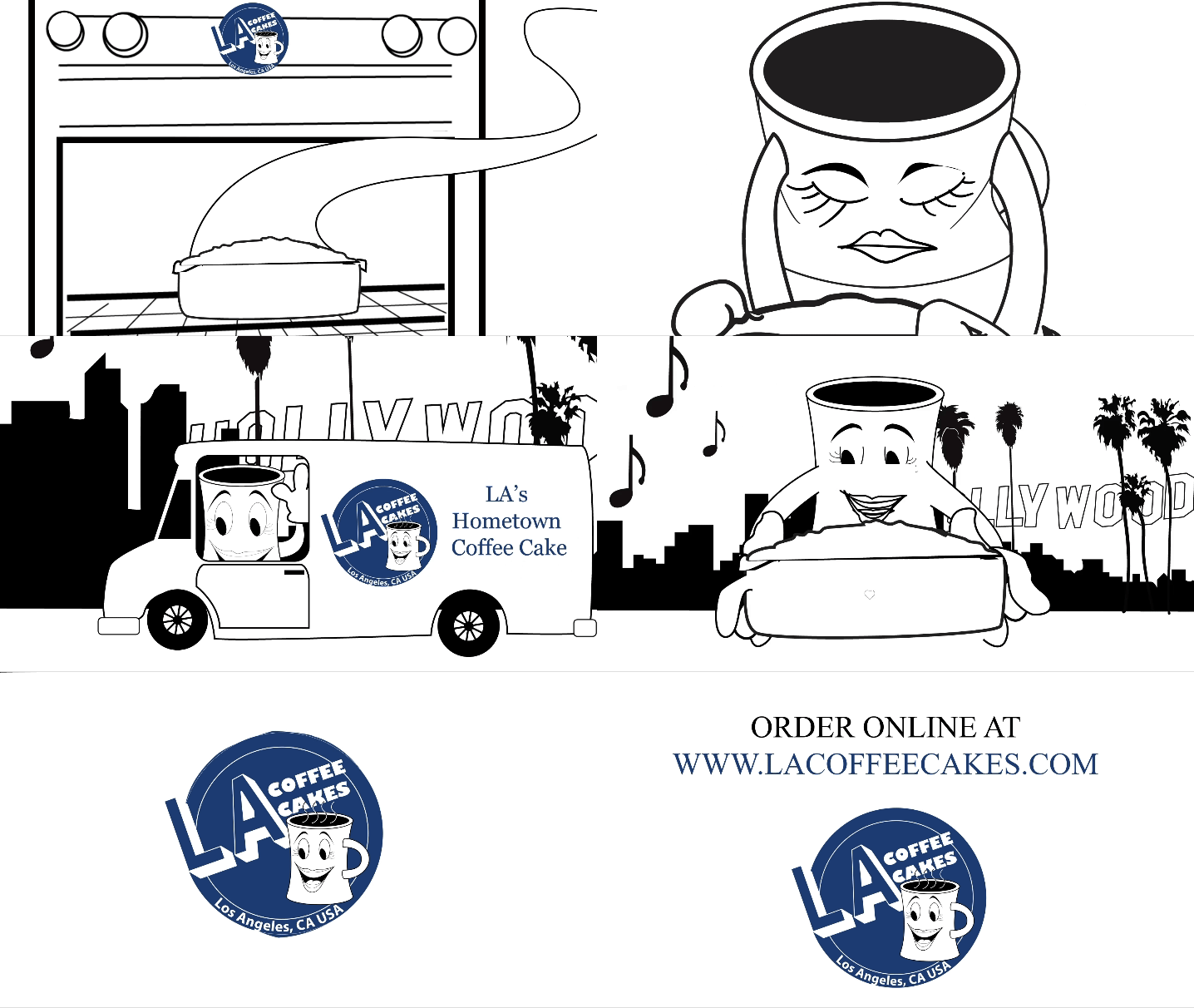
Below are some storyboards that I shared with my "LA Coffee Cake" client. I provided him with storyboards so he could see how his ideas would be animated. I've included the revisions as well. I will add more commentary and explanations about this project later. Stay tuned.


The storyboard directly below included a section where the main character is placing the coffee cake in a box in preparation for shipping. This resulted in a longer video. The client had a limited budget; so, he opted on deleting that portion.



To get an idea of how much work goes into animation consider how, typically, there are 24 frames per second in an animation. Imagine if there is one person just standing in the animation. Now imagine him sitting, then running, then dancing or spinning around, doing gymnastics--well, you get the picture. Now, imagine two persons or three persons or a crowd scene of people doing all of this movement. Now, double this for a
2 second (48 frames) animation or
60 second (1,440 frames) animation or
5 minutes (7,200 frames) or
30 minutes (43,200 frames)
or more.
Animation is a very labor-intensive endeavor. That's why when requesting an animation you should think about the cost and ask yourself "Is everything I'm asking for really worth the additional cost?" "Could I effectively get my message across with less complexity?" Quite often less is more.
I like happy customers. They tend to give me good reviews and come back for more and recommend me to other people.

What Our Clients Say

Monica Larson, Henderson City Council Ward 2 Henderson, Nevada
“Warrior is the consummate professional who delivers exceedingly and exceptional service with quality and a spirit of excellence.”